Data Sovereignty and the Identity Crisis: A Deep Dive into the Coupang Breach
PART TWO
Countermeasure Strategies Aligned to Root Causes: From Vulnerability to Verifiable Trust
Deputy Head of Master IT Program
Head of Cybersecurity Research Centre of Excellence
Head of Security Operations Center
Swiss German University
- Recap: Three Failures That Enabled the Breach
The Coupang incident was not accidental. It emerged from three structural weaknesses:
-
- Identity lifecycle failure: master signing keys survived employee termination [1], [2].
- Observability failure: a 147-day dwell time masked by valid credentials [1], [3].
- Jurisdictional failure: overseas access to domestic PII proceeded unchecked [1], [3].
These weaknesses were compounded by a compliance culture focused on audits rather than enforcement, despite proven countermeasures already deployed in other markets [4], [10].
- Strategy One: Jurisdictional Compliance as Code
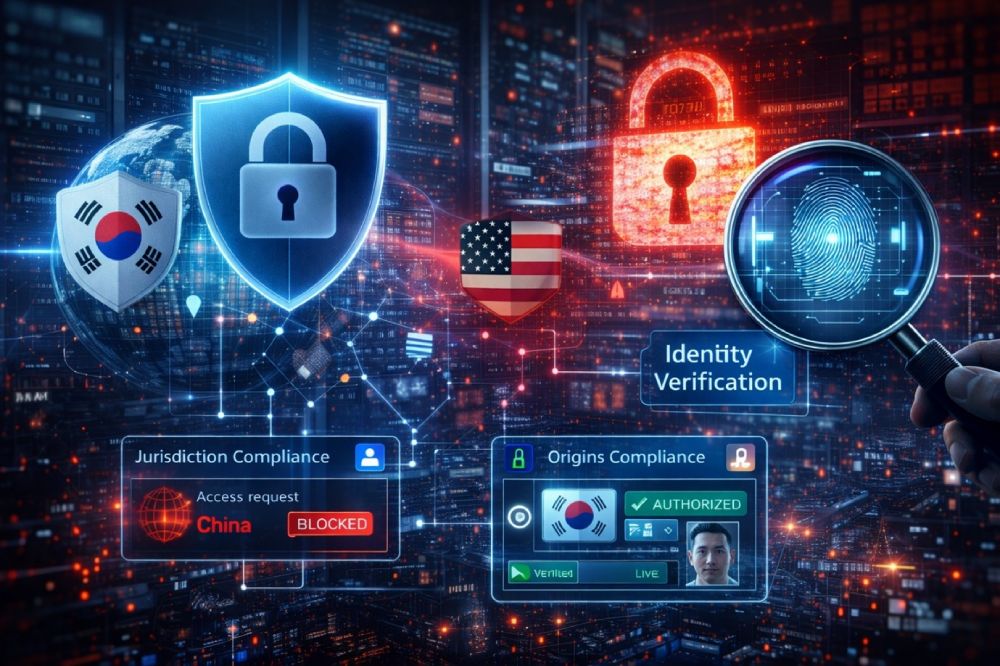
The primary attack vector was cross-border access. Policies alone cannot stop this. Organizations must implement a Jurisdictional Compliance Engine—an active control embedded directly into access pathways [1].
Such an engine evaluates the geographic and legal provenance of every request in real time. If a request originates from an unauthorized jurisdiction, it is blocked—even when valid credentials are presented.
This transforms data sovereignty from a legal promise into a technical guarantee, enforced by architecture rather than trust.
- Strategy Two: Origins Compliance and Cryptographic Provenance
To neutralize retained or cloned keys, systems must evolve beyond credential validity. Origins Compliance verifies the source of authority—binding actions to specific identities, devices, and execution contexts [1].
In practical terms, this means:
-
- Cryptographic linkage between key, device, and identity
- Immutable provenance chains for sensitive operations
- Continuous verification of execution context
The system no longer asks “Is the key valid?” It asks “Is this the authorized entity holding it?”
- Strategy Three: Automated Identity Revocation and Biometric Passkeys
The offboarding failure underscores the need for fully automated identity lifecycle management. The moment HR status changes, all keys, tokens, and privileges must be revoked globally—without manual intervention [1].
Static keys must be replaced with:
-
- Hardware-backed biometric passkeys
- Liveness detection
- Short-lived, non-replayable credentials
Had these controls been deployed domestically—as they were in Taiwan—the signing-key exploit would have been technically impossible [10].
- Strategy Four: Continuous Behavioral Monitoring
Reducing MTTD requires abandoning log-centric monitoring in favor of real-time behavioral analytics.
Effective systems flag:
-
- Overseas access to domestic PII
- Bulk data queries outside administrative baselines
- “Impossible travel” scenarios across jurisdictions
- Sudden changes in query velocity or scope
The goal is not retrospective analysis, but interruption while the breach is unfolding [1].
- Strategic Perspective: From Compliance to Resilience
Compliance helps organizations pass audits. Resilience prevents crises.
The Coupang case demonstrates how security failures cascade into geopolitical disputes. U.S. lobbyists framed the Korean investigation as trade hostility, while Seoul asserted domestic digital sovereignty [8].
In this environment, technical controls become diplomatic safeguards. Jurisdictional enforcement embedded in code protects organizations from both attackers and cross-border legal fallout.
- Forward-Looking Conclusion
The Coupang breach delivers a stark warning:
your most dangerous vulnerability is likely an identity you forgot to revoke.
Data protection is no longer confined to IT operations—it now intersects with national policy, consumer trust, and international trade. Security leaders must ask:
-
- Who holds our master keys?
- Can our systems verify truth—or only record failure?
The answers will define the next decade of digital governance.
References
[1] Sequenxa, 5 Lessons from the Coupang Leak & How to Stay Protected, Dec. 7, 2025.
[2] 이지현 and CSO Staff, Coupang breach of 33.7 million accounts allegedly involved engineer insider, CSO Online, Dec. 4, 2025.
[3] N. Kyung-min, Coupang data breach in 2 minutes, The Korea Herald, Jan. 25, 2026.
[4] L. Seung-hwan, Coupang’s “top security” certification proves hollow amid major data leaks, Maeil Business, Dec. 1, 2025.
[8] Z. Cindy, Seoul Faces Washington’s Pressure Over Coupang Probe, KoreaTechDesk, Jan. 25, 2026.
[10] Asian Boss, Why the U.S. Just Announced New Tariffs on South Korea, Nov. 30, 2025.