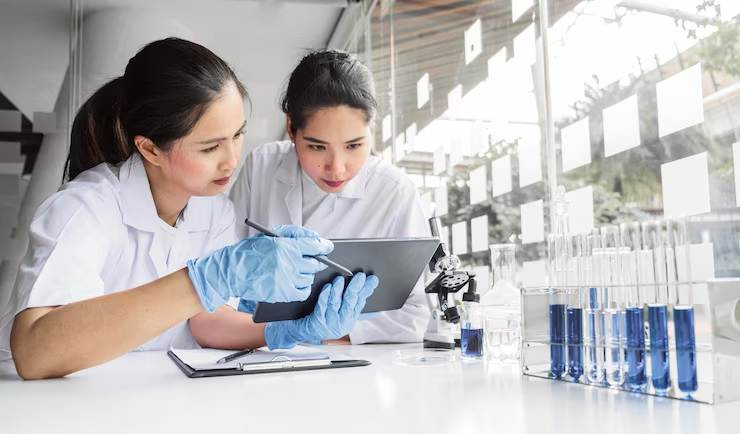
The Future is Biotech: How Medical Biotechnology is Revolutionizing Healthcare—and How SGU Prepares You for It
Imagine a world where cancer is diagnosed before symptoms appear, genetic disorders are corrected at the source, and personalized medicine is the standard. This is not science fiction. It’s the reality that medical biotechnology is building right now.
Medical biotechnology is one of the fastest-growing fields in science and healthcare. It combines biology, medicine, and technology to develop solutions for human health—ranging from life-saving drugs and vaccines to cutting-edge gene therapy and advanced diagnostics. The global biotechnology market is projected to reach over $3.88 trillion by 2030, driven by demand for innovations in genomics, bioinformatics, and personalized healthcare [source: Grand View Research, 2023].
So, where do future biotech pioneers come from?
At Swiss German University (SGU), the Bachelor in Medical Biotechnology program is designed for students who want to be part of this exciting future. Unlike traditional biology or medical science programs, SGU’s curriculum blends biomedical knowledge with strong foundations in data science, bioinformatics, and hands-on lab training, giving students not just the “what” of medical science—but also the “how.”
Let’s break it down.
1. From Genomes to Genes: Learning Beyond the Basics
SGU’s curriculum goes deep into key topics like Genomics, Transcriptomics, Proteomics, and Metabolomics. These are not just buzzwords. They are the tools researchers use to understand how diseases develop and how we can fight them at the molecular level. SGU students are exposed to these cutting-edge areas early, supported by practical courses like Bioinformatics and Artificial Intelligence for biomedical applications—areas that are reshaping modern medicine.
2. Global Exposure, Real-World Experience
One unique advantage of SGU’s program is the double degree with South Westphalia University in Germany. Students study 2.5 years in Indonesia and 1 year in Germany, experiencing international standards in research and laboratory work. Internships in both countries allow students to apply what they’ve learned in pharmaceutical R&D centers, hospital laboratories, and research institutions.
This real-world exposure makes SGU graduates globally competitive. They don’t just memorize theories—they practice science where it happens.
3. Career Paths That Matter
Medical biotechnology graduates can pursue careers in biomedical research, pharmaceutical industries, hospitals, and even launch their own biotech startups. SGU’s program supports this with entrepreneurship training and professional competence assessments, giving students the tools to lead as both scientists and innovators.
For those with academic ambitions, SGU paves the roads for students to pursue higher education and careers in the fields of gene editing, clinical engineering, and advanced biomedical research. With the rise of CRISPR technology and mRNA-based treatments, these fields are more relevant than ever.
4. An Industry-Driven Approach
What makes SGU stand out is how closely the program aligns with real industry needs. From microcontroller-based biomedical devices to herbal and traditional pharmaceutical materials, the program prepares students to tackle modern and regional health challenges. This includes responding to growing demands in sustainable biopharmaceuticals and digital health solutions.
The Right Time to Join the Biotech Revolution
We are living through a biotech revolution—and SGU’s Bachelor in Medical Biotechnology program places students at the heart of it. Whether you dream of discovering new vaccines, developing medical AI tools, or launching your own biotech venture, this program is a powerful place to start.
As healthcare continues to evolve, the world needs more minds who understand the language of DNA and the logic of innovation. SGU is shaping those minds—and the future of healthcare—with every graduate.